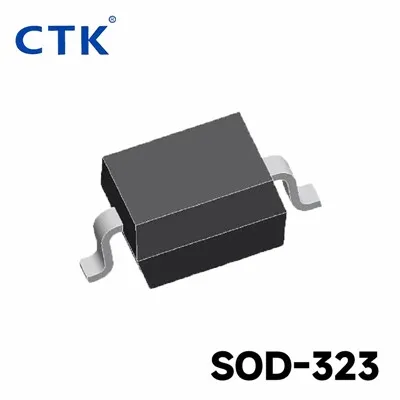
As a supplier of Schottky diodes, I often receive inquiries from customers about various electrical parameters of these diodes. One of the most frequently asked questions is about the reverse bias voltage limit of Schottky diodes. In this blog post, I will delve into this topic, explain the concept of reverse bias voltage limit, and discuss its implications for the application of Schottky diodes. Schottky Diodes
Understanding Schottky Diodes
Before we dive into the reverse bias voltage limit, let’s briefly review what Schottky diodes are. A Schottky diode is a semiconductor diode formed by the junction of a metal and a semiconductor, typically an N-type semiconductor. This metal – semiconductor junction gives Schottky diodes several unique characteristics compared to traditional PN – junction diodes.
One of the most notable features of Schottky diodes is their low forward voltage drop. While a typical silicon PN – junction diode has a forward voltage drop of around 0.6 – 0.7 volts, a Schottky diode can have a forward voltage drop as low as 0.15 – 0.45 volts. This low forward voltage drop results in less power dissipation and higher efficiency in many applications, such as power rectification circuits.
Another important characteristic is the fast switching speed. Schottky diodes have a very short reverse recovery time, which means they can switch from the conducting state to the non – conducting state rapidly. This makes them ideal for high – frequency applications, like switching power supplies and RF circuits.
What is Reverse Bias Voltage?
In a diode, the bias refers to the application of an external voltage across the diode. When a diode is forward – biased, the positive terminal of the voltage source is connected to the anode of the diode, and the negative terminal is connected to the cathode. In this state, the diode allows current to flow easily (assuming the forward voltage is greater than the forward voltage drop).
On the other hand, reverse bias occurs when the positive terminal of the voltage source is connected to the cathode and the negative terminal is connected to the anode. In a reverse – biased situation, an ideal diode would not conduct any current. However, in real – world diodes, including Schottky diodes, a small amount of reverse leakage current flows.
Reverse Bias Voltage Limit of Schottky Diodes
The reverse bias voltage limit, also known as the peak reverse voltage (PRV) or the maximum reverse voltage (VRRM), is the maximum voltage that can be applied in the reverse – bias direction across a Schottky diode without causing significant damage.
This limit is a crucial parameter because if the reverse bias voltage exceeds this limit, the diode may enter a breakdown mode. There are two main types of breakdown in diodes: avalanche breakdown and Zener breakdown. In Schottky diodes, avalanche breakdown is more common.
During avalanche breakdown, the high reverse – bias voltage accelerates the minority carriers in the semiconductor. These carriers collide with the atoms in the semiconductor lattice, creating new electron – hole pairs. This process is cumulative, and as more and more electron – hole pairs are generated, the reverse current through the diode increases rapidly. If the current is not properly limited, it can cause excessive power dissipation in the diode, leading to overheating and ultimately permanent damage.
Factors Affecting the Reverse Bias Voltage Limit
Several factors can influence the reverse bias voltage limit of Schottky diodes:
- Semiconductor Material: The type of semiconductor material used in the Schottky diode plays a significant role. For example, diodes made with different doping levels of the semiconductor can have different breakdown voltages. Higher doping levels generally result in lower breakdown voltages.
- Junction Design: The physical design of the metal – semiconductor junction also affects the reverse bias voltage limit. The quality of the interface between the metal and the semiconductor, as well as the size and shape of the junction, can impact the breakdown characteristics of the diode.
- Temperature: Temperature has a significant effect on the reverse bias voltage limit. As the temperature of the diode increases, the reverse leakage current also increases. This can lead to a decrease in the effective breakdown voltage. At high temperatures, the diode is more likely to enter breakdown at a lower reverse – bias voltage.
Importance of Reverse Bias Voltage Limit in Applications
Understanding the reverse bias voltage limit is essential for the proper use of Schottky diodes in various applications:
- Power Rectification: In power rectifier circuits, Schottky diodes are used to convert alternating current (AC) to direct current (DC). The reverse bias voltage across the diode can be quite high, especially in high – voltage power supplies. Selecting a Schottky diode with an appropriate reverse bias voltage limit ensures that the diode can withstand the reverse voltage spikes that occur during the rectification process without breakdown.
- Switching Power Supplies: In switching power supplies, Schottky diodes are used in the output rectifier stage. The high – frequency switching operation can generate significant reverse voltage transients. If the reverse bias voltage limit of the diode is not sufficient, these transients can cause the diode to breakdown, leading to power supply failure.
- RF Circuits: In radio – frequency (RF) circuits, Schottky diodes are used for functions such as mixing, detection, and switching. The reverse bias voltage limit is important in these applications to ensure the proper operation of the circuit and to prevent damage to the diodes due to high – frequency voltage variations.
Selecting the Right Schottky Diode Based on Reverse Bias Voltage Limit
When selecting a Schottky diode for a specific application, it is crucial to choose a diode with a reverse bias voltage limit that is higher than the maximum reverse voltage expected in the circuit. This provides a safety margin to account for voltage spikes and variations.
For example, if the maximum reverse voltage in a power rectifier circuit is expected to be 50 volts, it is advisable to choose a Schottky diode with a reverse bias voltage limit of at least 60 volts. This extra margin helps to ensure the reliability and longevity of the diode.
Our Offer as a Schottky Diode Supplier
As a trusted supplier of Schottky diodes, we offer a wide range of products with different reverse bias voltage limits to meet the diverse needs of our customers. Our diodes are manufactured using high – quality semiconductor materials and advanced manufacturing processes, ensuring excellent performance and reliability.
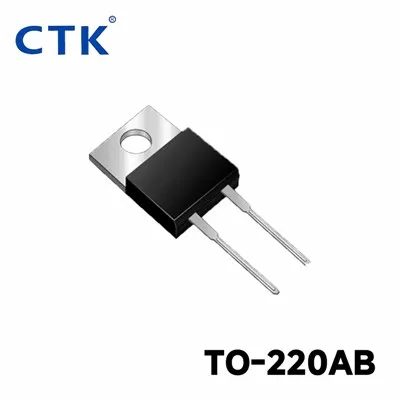
Whether you are designing a high – voltage power supply, a high – frequency RF circuit, or any other application that requires Schottky diodes, we can provide you with the right products. Our technical support team is also available to assist you in selecting the most suitable diodes for your specific requirements.
Rectifer If you are in the market for Schottky diodes and want to discuss your procurement needs, we encourage you to reach out to us. We are committed to providing you with the best products and services at competitive prices. Our team is eager to start a conversation and help you find the optimal Schottky diode solutions for your projects.
References
- Millman, Jacob, and Halkias, Christos C. "Integrated Electronics: Analog and Digital Circuits and Systems." McGraw – Hill, 1972.
- Neamen, Donald A. "Semiconductor Physics and Devices: Basic Principles." McGraw – Hill, 2003.
- Shur, Michael. "GaN, AlN, and InN: Properties, Processing, and Applications of Wide – Bandgap Semiconductors." John Wiley & Sons, 1999.
Tongke Electronic Co., Ltd
Tongke Electronic Co., Ltd. is one of the most experienced schottky diodes manufacturers and suppliers in China, featured by quality products and low price. Please rest assured to wholesale advanced schottky diodes made in China here from our factory. Contact us for pricelist.
Address: No.3,Chayuan Rd, Street 3, AilingKan, Dalingshan, Dongguan, Guangdong, China.
E-mail: jack@ctk-elec.com
WebSite: https://www.ctkchip.com/
