If you’ve ever stood in a home improvement store, staring at a can of architectural emulsion (the kind formulated for interior walls) and then glanced at a scuffed wooden door, a weathered bookshelf, or even a half-finished outdoor planter, you’ve probably wondered: can architectural emulsion be used on wood? As a supplier of architectural coating emulsions, I field this question at least twice a week—from homeowners tackling weekend projects, small contractors juggling tight budgets, and even builders looking for a quick, consistent finish for new wood trim. The short answer isn’t a simple “yes” or “no.” It depends on what kind of emulsion we’re talking about, the type of wood you’re prepping, and what you’re hoping to get out of the final finish. Let’s break this down, based on years of working with formulators, contractors, and DIYers who’ve tested every iteration of this combination. Architectural Coating Emulsion
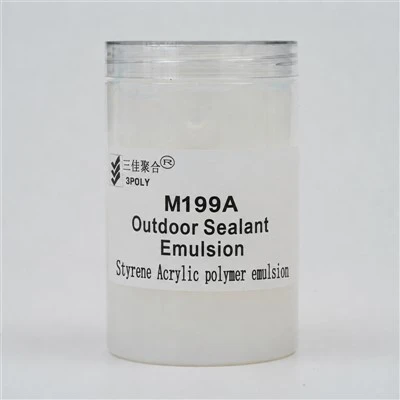
First, let’s get clear on what architectural emulsion actually is, because that’s where the confusion starts. Most architectural emulsions (sometimes called latex paints, though we prefer the more specific term) are water-based dispersions of polymer particles—acrylic, vinyl acrylic, styrene acrylic, or combinations of these—designed explicitly for porous, alkaline surfaces like drywall, plaster, or masonry. They’re formulated to adhere to those materials, breathe well, resist mildew in high-moisture spaces like bathrooms, and offer a range of sheens from flat to satin to semi-gloss. The key here is that their chemistry and performance parameters are tailored to those substrates, not wood.
Now, wood is a very different animal. It’s porous, it’s hygroscopic (it absorbs and releases moisture as humidity or temperature changes), and its surface is far more uneven than a smooth wall. It also has natural oils, tannins, and grain that can bleed through finishes if not sealed properly. That’s why traditional wood finishes—oil-based varnishes, polyurethanes, shellac, or even specialized wood stains—are formulated to penetrate wood, bind to its fibers, and provide a protective layer that’s flexible enough to move with the wood as it expands and contracts. Architectural emulsions, on the other hand, are designed to form a continuous film on top of the wall, not penetrate into its pores. That film is rigid, not flexible, which is the root of most problems when people try to use wall paint on wood.
Let’s start with the cases where architectural emulsion can work on wood—and why they work. The first big exception is when you’re working with interior, dimensionally stable wood, like interior trim, baseboards, or wood furniture that’s not going to be exposed to temperature swings or high humidity. For example, if you have a solid pine bookshelf in your living room that’s never moved, or a set of oak interior doors in a climate-controlled home, a high-quality, 100% acrylic architectural emulsion can work surprisingly well, as long as you prep the wood correctly. The reason here is that this kind of emulsion forms a durable, washable film that resists scuffs and stains—properties that make it popular for high-traffic wall areas, and those same properties transfer to wood that’s not going to move much. The key here is prep: you can’t just sand the wood and slap emulsion on top. First, you need to seal the wood’s pores with a bonding primer that’s designed for both wood and emulsion. A standard wall primer won’t cut it here; you need a shellac-based or acrylic bonding primer that blocks tannins (for woods like oak or cherry that bleed) and creates a rough, adhesive surface that the emulsion can grip. Without that primer, the rigid emulsion film will separate from the wood as it moves, leading to peeling within months.
Another case where architectural emulsion works on wood is for temporary or low-stakes projects. If you’re building a set for a community play, or a decorative wooden sign that will only be used indoors for a year or two, emulsion is a perfect, cost-effective choice. It’s cheap, easy to apply, dries quickly, and comes in every color imaginable—way more options than most specialized wood finishes. I’ve worked with a local theatrical set builder who swears by our mid-grade vinyl acrylic emulsion for this exact purpose: it covers the MDF and wood set pieces evenly, doesn’t chip during transport, and is easy to touch up mid-run. The downside here is durability, but for temporary projects, that’s not a concern.
Now, let’s talk about when you should never use architectural emulsion on wood—because that’s where most of the mistakes happen. The first big red flag is exterior wood. If you’re finishing a deck, a fence, a garden shed, or any wood that’s exposed to sunlight, rain, temperature changes, or freeze-thaw cycles, architectural emulsion is a terrible choice. Here’s why: the rigid film of wall paint can’t flex as the wood expands in summer heat and contracts in winter cold. After a season or two, that film will crack, peel, and flake off, leaving the wood unprotected and vulnerable to rot, insect damage, and UV decay. Exposed sunlight will also break down the acrylic polymers in the emulsion far faster than it breaks down specialized exterior wood coatings, because those are formulated with UV stabilizers and flexible binders. We tested this a few years ago when a new customer—a small construction company—ordered 50 gallons of our standard architectural emulsion to finish their outdoor storage sheds. Within 18 months, every shed’s finish was peeling. They called us furious, thinking our product was defective, until we walked them through the performance differences between wall paint and exterior wood coatings. That’s a mistake we see all the time.
Another time to avoid architectural emulsion on wood is for high-moisture interior spaces: bathrooms, kitchens, laundry rooms, or any area where the wood will be exposed to regular steam or spills. Even the most washable wall emulsion isn’t designed to withstand constant water exposure. Wood that’s regularly damp will absorb moisture, and the rigid emulsion film will trap that moisture inside, leading to warping, mold growth under the finish, and peeling. Specialized interior wood finishes, like water-based polyurethanes or oil-modified varnishes, are vapor-permeable enough to let small amounts of moisture escape, while still providing a water-resistant layer. Emulsion’s non-breathable film prevents that escape, leading to long-term damage.
There’s also the issue of finish quality. If you’re after a smooth, glossy, durable finish that will last for decades, architectural emulsion on wood will almost never match the performance of a specialized wood coating. Emulsion’s sheen range is limited compared to polyurethanes, and while it’s washable, it’s not scratch-resistant enough for high-use furniture or countertops. I had a customer a few months back who tried to use our satin architectural emulsion on a kitchen island. It looked great for the first month, but after a few months of cutting vegetables and setting hot pans, the finish was scratched and dulled, and small areas had peeled around the edges. He ended up stripping it and applying a water-based polyurethane, which lasted way longer and held up far better.
That said, the lines are getting blurrier as architectural coating technology advances. We’ve recently developed a line of flexible acrylic emulsions, specifically formulated for use on dimensional interior wood and medium-density fiberboard (MDF), that have a higher elongation rate—meaning they can stretch a small amount with wood movement without cracking. We’ve tested these emulsions on baseboards, trim, and interior furniture, and they hold up significantly better than standard wall emulsions. Formulators have adjusted the polymer backbone to add more flexibility, while still retaining the washability and color consistency that make architectural emulsions popular. If you’re working on interior wood that gets a decent amount of use, this type of modified emulsion is a game-changer—though it’s still not recommended for exterior or high-moisture applications.
So, what’s the takeaway for anyone considering using architectural emulsion on wood? Let’s distill this into practical rules:
- If your wood is exterior: No. Use an exterior wood coating, designed to flex with wood movement and resist UV damage.
- If your wood is in a high-moisture interior space (bathroom, kitchen): No. Use a wood-specific finish that’s vapor-permeable.
- If your wood is interior, dimensionally stable (not moving, like fixed trim or a bookshelf in a climate-controlled home), and you’re prepping it correctly: Yes, especially if you use a flexible acrylic emulsion and a high-quality bonding primer.
- If your project is temporary, low-stakes (like a play set or decorative sign): Yes, architectural emulsion is a cost-effective, easy choice.
As someone who supplies architectural coating emulsions, my number one priority is helping customers get the right product for their job, not just selling the cheapest option. I’ve seen too many people waste time and money trying to make wall paint work on wood, when a simple swap to a specialized wood finish would have given them the results they wanted, faster and with less hassle. That’s why I always tell people: if you’re unsure, reach out.

If you’re a contractor working on interior trim, a homeowner refinishing furniture, or a builder sourcing finishes for new residential construction, and you want to talk through the best emulsion product for your wood project, I’m here to help. Whether you need guidance on prep, product specs, or volume pricing for large projects, my team can walk you through every step to make sure your finish looks great and lasts as long as you need it to. Don’t guess at the right product—let’s find the solution that works for your specific project needs.
Environmentally Friendly Lotion References
- Koleske, J. V. (Ed.). Paint and Coatings Testing Manual, 4th ed. ASTM International.
- Evans, R., & Ibach, R. E. (2013). Wood Handbook: Wood as an Engineering Material. U.S. Department of Agriculture Forest Service.
- Lambourne, R., & Strivens, T. A. (1999). Paint and Surface Coatings: Theory and Practice, 2nd ed. Woodhead Publishing.
- American Society for Testing and Materials (2020). Standard Test Method for Measurement of Elongation of Polymer Films Used in Coatings. ASTM D412.
- Tracton, A. A. (2006). Coatings Technology: Fundamentals, Testing, and Processing Parameters. CRC Press.
Shandong Sanjia Polymer Material Co., Ltd.
As one of the most experienced architectural coating emulsion manufacturers in China, we also support customized service. With a professional production team, we are able to meet the needs of the majority of our customers. Please feel free to buy bulk advanced architectural coating emulsion from our factory.
Address: No.15 Hengtong Road, Tancheng County, Linyi City, Shandong Province
E-mail: yudongxu1109@gmail.com
WebSite: https://www.3emulsion.com/
