Hey there, let’s cut the crap—if you’re here scrolling for how to pick the right cooling method for a dry-type transformer, you’re probably tired of guessing which setup won’t overheat your gear, eat into maintenance, or end up costing you way more down the line. I’ve been selling dry-type transformers for 8 years now, and I’ve seen every mistake in the book: guys buying a $5k unit with a “cheap” cooling setup that died in a commercial kitchen 6 months later, or a hospital that overpaid for a fancy cooling system they never needed. So let’s skip the jargon and get real—no textbook nonsense, just what actually works. Dry-type Transformer
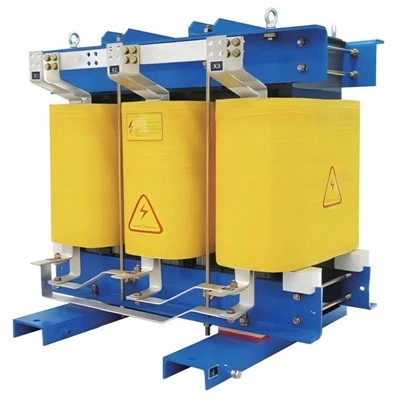
First off, let’s get one thing straight: dry-type transformers don’t use oil, which is why they’re so popular in places where a spill would be a disaster—think hospitals, schools, apartment buildings, or downtown retail. That also means their cooling is way different from oil-immersed units, and picking the wrong method here is a fast track to overheating failures, shortened lifespan, or even fire risks (yes, dry units can catch fire if they overheat bad enough—don’t let anyone tell you otherwise).
Let’s start with the most common cooling types, ranked by when you’d actually use them. First, the OG: AN/AN (Air Natural / Air Natural). This is the baseline, no frills setup. What is it, exactly? Just the core and windings sitting in a ventilated enclosure, relying on room air to circulate through the unit, passively carrying away heat. No fans, no extra parts, just metal and air. Now, when is this worth it? Only for small loads, like under 1 MVA, and places where the ambient temp is pretty consistent—like a basement in a cold climate, or a utility closet in an office that never gets above 90°F. Wait, but here’s the catch: if you stick an AN-rated transformer in a stuffy server room where temps hit 105°F on hot days? It’ll run at 125% of its rated load for no reason, which kills the insulation in 2-3 years instead of 20. I had a client learn that the hard way last year—they used an AN transformer for a new data closet addition, forgot how hot server gear gets, and it blew a winding within 18 months. Don’t do that.
Next up: AF/AN (Air Forced / Air Natural). This is the workhorse for most commercial and light industrial use. Here, you add a set of fans that kick on automatically when the unit hits a certain temp (usually around 110°C, which is standard for Class F insulation). When the fans are running, the unit can handle 150% of its rated load—game changer for places that have peak loads, like a mall during Black Friday, or a factory that runs two shifts a day. Wait, but when do you pick this over AN? If your load is between 1 MVA and 5 MVA, or your ambient temp fluctuates—like a place that’s 80°F in winter and 100°F in summer. Also, if space is tight: AF setups are a bit smaller than equivalent AN units because the forced air helps move heat better. But here’s a pro tip: don’t skimp on fan quality. I once sold a cheap AF transformer to a small manufacturing plant where the fans were rated for 10,000 hours instead of 50,000. They had to replace the fans 3 times in 2 years, which ended up costing more than the extra $200 for a good fan package.
Then we get to the big boys: AFAF (Air Forced / Air Forced). This is for heavy-duty, high-load applications. Think hospitals with 1000-bed towers, large manufacturing plants, or data centers that run 24/7. This setup has fans blowing on both the primary and secondary windings, so it can handle loads up to 200% of the unit’s rating. Wait, why would you ever need that? Let’s say a hospital is planning to add a new wing with MRI machines, a new HVAC system, and a server farm—all at once. They don’t want to replace the transformer in 5 years when they hit peak load, so they go with AFAF. It’s also good for places where the ambient air is extra dirty or humid—like a food processing plant with flour dust, or a shipyard where salt air is a problem. The forced air is more consistent, so the unit doesn’t have to work as hard to fight off grime. But don’t get me wrong—this is overkill for a small dentist’s office. I had a dentist call me last year asking for a quote on an AFAF unit because his office had 5 operatories, which is only a 150 kVA load. I told him it’s like buying a semi-truck to drive to the grocery store—way too much, way too expensive upfront, and the maintenance on the extra fans is a waste of money.
Wait, there’s another type that’s popping up more these days: water-cooled dry-type transformers. Yeah, I know—you thought dry units never use water, but some high-voltage, high-load applications use water cooling instead of air. Think power substations, big industrial facilities with continuous heavy loads. The downside is you need a water line, and you have to maintain that cooling loop (no leaks, no clogs). But for loads over 10 MVA, it’s actually more efficient than air cooling—fans use a lot of energy, right? A big AFAF setup can draw 5-10 kW just for the fans, which adds up to a lot on electric bills. Water cooling uses half that, roughly. But this is definitely not for small to mid-sized projects—if you’re not running a factory that’s cranking 24/7, forget about water-cooled.
Now, let’s talk about the factors that actually matter, not just the cooling type name. I can’t tell you how many times a customer says “give me an AN transformer” and that’s a terrible fit. Let’s break down the decision factors step by step, so you don’t make that mistake.
First: Load Size and Demand. This is the biggest one. If your load is under 1 MVA and constant, go AN. If it’s between 1 MVA and 5 MVA with peak loads, AF/AN. If it’s over 5 MVA, or you expect your load to grow by 50% in the next 5 years, AFAF. Let’s do a quick example: a 2 MVA grocery store. Their peak load is during the day, when freezers, lights, and cash registers are running. AN unit would struggle on a 100°F summer day—fans aren’t there to help. AF/AN would handle that peak load no problem, and the extra fans kick in automatically when it gets hot. That’s an easy call.
Second: Ambient Conditions. This ties directly to load. If your unit is in a place with stable, cool air (like a basement in Minnesota), AN is fine. But if it’s in Phoenix, where summer temps hit 115°F, even a 1 MVA load is gonna need AF. Also, humidity and dust: if you’re in a coastal area with salt air, or a sawmill with wood dust, the fans in AF or AFAF actually help push air through the unit, so less dust builds up on the windings. AN units can get caked in dust, which blocks air flow and causes overheating. I had a client in a lumber yard go with AN once—2 years later, the unit was so full of sawdust it looked like a snow globe, and it overheated during harvest season. They had to pull it out and clean the windings, which cost more than upgrading to AF would have in the first place.
Third: Space and Budget. Let’s be real, budget matters, but so does space. AN units are the smallest, upfront cheapest, no moving parts to maintain. AF/AN is a bit bigger, but cheaper than AFAF. AFAF is the biggest, most expensive upfront, but saves you from replacing a unit in 5 years. If you’re in a downtown building where the transformer room is only 6ft x 6ft, you might have to go with AF or AFAF because AN units need more air flow space around them. Conversely, if you have a big warehouse with a 10ft x 10ft utility room, AN is fine and saves you money. Also, maintenance costs: AF units have fans that need to be checked every 2 years, AFAF has two sets, so more checks. AN has zero moving parts, so almost no maintenance.
Fourth: Safety Requirements. This is huge for hospitals, schools, and government buildings. Dry-type transformers are already safer than oil-immersed because no flammable fluid, but the cooling method affects that too. If a fan fails in an AF unit, it will still run at its rated load—you just lose the overload capacity. It’s not gonna catch fire instantly. AFAF same thing, but even more redundant because both fans are running, so if one fails, the other still works. AN has no fans, so no risk of fan failure. Wait, but let’s put that in perspective: fan failure is rare, and most units have alarms that notify you right away. I’ve had only 2 fan failures in 8 years, and both clients got an email alert before the transformer even overheated. So safety is a factor, but not something to panic over—unless you’re in a ultra-critical application like a data center’s backup power system, where you might want AFAF with redundant fans.
Now, let’s bust some common myths I hear all the time. First myth: “Dry-type transformers don’t overheat.” No, they do—all transformers generate heat. The only difference is oil ones can leak and catch fire, dry ones just overheat if cooling is wrong. Second myth: “Fancy cooling systems are always better.” No—if you don’t need the extra load capacity, you’re just wasting money on fans and maintenance. I had a small office complex go with AFAF for a 500 kVA load, and they spent $3k extra upfront plus $500 a year on fan checks. They told me later they could have saved $10k over 5 years with an AF unit. Third myth: “AN cooling is only for tiny units.” No, you can get AN units up to 2 MVA, but only if the ambient temp is under 86°F consistently. I wouldn’t recommend it for anything over that, though.
Wait, let’s also talk about real-world examples from my own clients, because that’s what you care about. Let’s start with a good call: a 3 MVA strip mall in Atlanta. They had 12 storefronts, plus a movie theater that runs 10pm-2am. Their ambient temp hits 95°F in summer, and they expected to add a few more storefronts in 3 years. We went with an AF/AN unit. 4 years later, they added 2 more stores, and the AF unit’s 150% overload capacity let them handle the extra load without replacing the transformer. That’s a win. Now a bad call: a 1.5 MVA elementary school in Houston. They went with an AN unit because the sales rep told them it was “standard.” Houston summers hit 102°F, so during back-to-school season (when AC and lights are running full blast), the transformer ran at 140% load, overheated, and tripped during a parent-teacher conference. They had to rent a temporary generator for 2 days, which cost them $2,000, and they had to replace the transformer’s winding insulation. Total bill? $12k. If they’d gone with AF/AN for an extra $800 upfront, that never would have happened.
So now, how do you actually make the call? Let’s make a simple checklist you can use right now:
- What’s your total connected load, and what’s your projected load in the next 5 years? (Add 20-30% for new equipment, you’ll thank me later)
- What’s the average and maximum ambient temp at the unit’s location? Check your local weather averages, and if it’s in an enclosed space (like a basement or utility closet), add 10-15°F because the air gets trapped.
- Is the space around the transformer limited? If yes, go with a cooling method that’s more compact (AF/AFAF)
- What’s your maintenance budget? If you want almost no maintenance, go AN. If you don’t mind checking fans every few years, AF/AFAF.
- Do you have any safety rules? Like, if it’s a hospital or data center, make sure there are alarms for fan failure.
Wait, and one last thing: talk to a supplier who actually knows what they’re talking about, not just pushing the most expensive unit. I’ve had guys come to me after buying a transformer from a big box supplier who sold them the wrong cooling setup, and they’re stuck paying to replace it. I don’t do that—my job is to sell you a unit that works for your needs, not the one that makes me the most money. If you’re not sure, send me your load details, location, and location size, and I can help you pick the right cooling method. No pressure, no sales pitch, just real advice.
Let’s wrap this up so you don’t leave confused. The short version: if you’re under 1 MVA, stable cool space = AN. 1-5 MVA, fluctuating temps or peak loads = AF. Over 5 MVA, or growing fast = AFAF. Anything over 10 MVA, check water-cooled if you want efficiency. Don’t overbuy, don’t underbuy, and don’t ignore ambient conditions. I’ve seen too many people get burned by cutting corners on cooling, and I don’t want that to be you.

And hey, if you’re working on a project right now, whether it’s a new building, an addition, or replacing an old transformer, hit me up to chat about cooling methods. I can give you a free, no-obligation assessment, no fine print, just what you need to keep your power running without headaches.
Dry-type Transformer References
IEEE Std C57.12.00: Standard for General Requirements for Liquid-Immersed Distribution, Power, and Regulating Transformers
National Electrical Manufacturers Association (NEMA) Publication TP 1: Guidelines for the Application, Installation, Operation, and Maintenance of Dry-Type Transformers
Occupational Safety and Health Administration (OSHA) Guidelines for Electrical Equipment Safety in Commercial and Industrial Facilities
Underwriters Laboratories (UL) Standard 1561: Dry-Type General Purpose and Power Transformers
Ruibian (Jiangsu) Electric Power Co., Ltd.
Ruibian (Jiangsu) Electric Power Co., Ltd. is one of the most professional dry-type transformer manufacturers and suppliers in China, featured by quality products and good price. Please rest assured to buy durable dry-type transformer in stock here from our factory. Contact us for pricelist.
Address: No.89 Changjiang West Road, Haian City, Jiangsu Province, China
E-mail: business@ruibianjiangsu.cn
WebSite: https://www.ruibianpower.com/
