If you’ve ever stood in a grocery store aisle, grabbed a cold soda from the bottom of a display, or watched a factory line’s conveyor belt hum along like clockwork, you’ve used something powered by an AC motor. I’ve been selling these motors for almost a decade now, and I still get stopped by customers who think they’re just “the things that power big machines.” Nope—they’re everywhere, and picking the right one isn’t just a “set it and forget it” job. Let me break down how these bad boys show up in almost every industry you can name, and why my team and I don’t just ship parts—we ship solutions that actually work for your setup. AC Motor
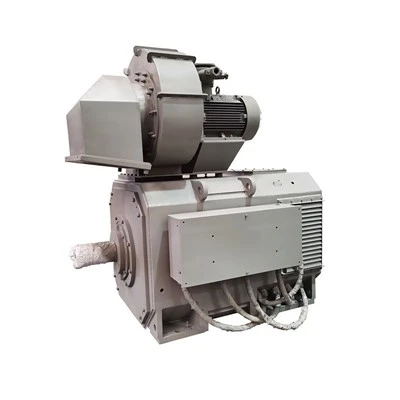
First off, let’s keep it real: AC motors aren’t the flashiest piece of equipment, but they’re the workhorses of modern life. Unlike DC motors, which need a whole separate power inverter to run (and tend to wear out faster with all those moving parts), AC motors plug right into the grid, are super durable, and last way longer. That’s why you’ll find them in almost every corner of commercial and industrial spaces. Let’s start with the stuff everyone interacts with daily: commercial buildings. You step into an office building, turn on the lights, and don’t think twice about the HVAC system that keeps it 72 degrees. 9 times out of 10, those air handlers, furnace blowers, and even the elevator motors are AC motors. Same with grocery stores—those open refrigerators that hold milk, cheese, and ice cream? The compressors that keep them cold run on efficient, variable-speed AC motors, not the old clunky ones from 20 years ago.
Wait, variable-speed is key here. A lot of newer AC motors can adjust their speed based on what you need, not just running at full blast 24/7. For a retail store, that means the HVAC doesn’t waste energy pumping cool air when the store is empty at 2 a.m. For office spaces, it’s not blowing full force when only a handful of people are working. I had a customer last year, a small chain of cafes, who were using old, fixed-speed compressors for their cold display cases. Their energy bills were through the roof—like, $1,800 a month just for refrigeration. We swapped them for efficient variable-speed AC motors, and their bills dropped by almost $500 a month. They thought it was too good to be true, but it’s just how good these motors are at not wasting power.
Now, let’s talk about manufacturing—this is where my team does most of our heavy lifting, no pun intended. If you’ve ever driven a car, that car was probably made in a factory with dozens of AC motors powering every step of the line. Conveyor belts that move car frames from welding to painting, robotic arms that lift parts, even the big presses that stamp out body panels—all AC motors. They’re perfect for manufacturing because they can handle heavy loads 24/7 without overheating, and they’re easy to integrate into automated systems. I worked with an auto parts plant a while back that was having issues with their packaging line: the old motors kept burning out every three months because they were running non-stop, and downtime was costing them $10,000 a day. We swapped in industrial-grade AC motors with thermal overload protection, and those motors have been running for three years straight now. No more downtime, no more replacing parts every quarter. That’s the kind of win I live for.
Another big one: agriculture. If you’re in farming, you know AC motors aren’t just tractors (though some tractors use them, too—most small to mid-sized farms rely on them for their power needs). They power irrigation pumps that keep corn and soy fields watered, grain augers that move harvested grain from combines to storage bins, and even the fans in barns that keep cows cool and milk fresh. I had a farmer in Iowa reach out to me last year because his old irrigation pump motor died mid-season, right when his corn was starting to tassel. He was panicking because if the corn didn’t get water, he’d lose half his crop. We expedited a heavy-duty AC motor to him, and it was installed in 48 hours. He texted me a week later saying his fields were looking better than ever. That’s when I realized how much these motors matter—they’re not just a product, they’re part of someone’s livelihood.
Then there’s the food and beverage industry, which is super unique because it’s not just about power—they have to be sanitary, too. AC motors can be sealed to keep out moisture, food particles, and cleaning chemicals, which is non-negotiable for processing plants. They power mixers, fermenters, bottling lines, even the refrigeration that keeps food safe from farm to shelf. A craft brewery in Oregon I worked with was having trouble with their bottling line: the old motors were leaking oil onto the glass bottles, which was a huge health risk. We installed stainless steel, washdown-rated AC motors that are completely sealed, no moving parts exposed, and they run quiet enough that their line workers don’t have to yell over them. They passed their next health inspection with flying colors, and production went up by 15%. Win-win.
Don’t sleep on healthcare, either. Hospitals and clinics need reliable, precise power for all their equipment. AC motors power MRI machines, CT scanners, and the ventilation systems in operating rooms (which have to maintain a specific temperature and air quality). Even the hospital laundry rooms use AC motors for washers and dryers, and the elevators that move patients and staff between floors. I worked with a local hospital a few years back that was dealing with frequent outages in their HVAC system during peak hours. Their old motors couldn’t handle the load when all the operating rooms, labs, and patient rooms were running at the same time. We upgraded them to high-efficiency AC motors that can handle variable loads, and they haven’t had an outage since. For a hospital, that’s not just convenient—it’s a matter of patient care.
Now, let’s get into what makes a good AC motor work, because that’s where most people go wrong. A lot of customers come to me and say “I need an AC motor” without telling me what it’s for, and that’s a mistake. You don’t put a motor meant for a small farm irrigation pump in a factory press, and you don’t put a motor meant for a grocery store display case in a hospital MRI. You have to think about load size, speed requirements, environment, and how often it’s running. That’s why my team and I don’t just send a catalog link—we ask questions. How many hours a day does it run? Is it in a hot, dusty factory or a wet, cold food processing plant? Does it need to adjust speed, or just run at one fixed speed? All that stuff matters, because picking the wrong motor will cost you more in repairs, energy bills, and downtime down the line.
Let’s talk energy efficiency, too—this is a huge selling point these days, with everyone trying to lower their carbon footprint and their utility bills. Newer AC motors (especially permanent magnet AC motors, which are more efficient than standard induction ones) use 10-30% less energy than older models. That adds up fast for facilities that run motors 24/7. A data center, for example, has thousands of AC motors powering servers, cooling systems, and backup generators. Upgrading just a portion of those motors can cut their energy use by millions of kilowatt-hours a year, which is not only good for the planet but also saves them hundreds of thousands of dollars. I had a data center client in Texas who was paying $2 million a year in energy costs for their cooling systems. We worked with them to replace all their old, inefficient motors with high-efficiency AC motors, and their energy bill dropped by $450,000 a year. That’s money they can put back into expanding their facility, not wasting on power.
I want to be real with you, too—AC motors aren’t perfect. They don’t work well for applications that need very low speed or high torque at low speeds (that’s more DC motor territory). But for 90% of the industrial and commercial applications out there, they’re the best choice. And the best part? They’re getting better all the time. New tech has made them smaller, lighter, more efficient, and easier to integrate with IoT and automation systems. You can connect a lot of modern AC motors to a network, so you can monitor their performance in real time—get alerts if they’re overheating, if they need maintenance, before they break down and cause downtime. That’s a game-changer for businesses that can’t afford to stop production.
Now, let’s get back to why I’m writing this. I’ve been in this game long enough to see customers waste thousands of dollars on the wrong motors, or settle for cheap ones that break too soon. My team and I don’t do that. We take the time to listen to what you need, not just sell you a motor that fits the size. We’ve worked with everyone from small cafes to huge manufacturing plants, from family farms to hospital systems, and we treat every customer like they’re our only customer. Because at the end of the day, if your motor works, you’ll come back, and you’ll tell your friends. That’s how we’ve built our business—on word of mouth, not flashy ads.
If you’re dealing with a motor that’s always breaking, that’s costing you too much in energy bills, or that doesn’t fit what you need, reach out to my team. We can walk you through your options, answer any questions you have, and help you find the right AC motor for your specific application. No confusing jargon, no hidden fees, just straight talk and a motor that works when you need it to.
Wait, before I go, let me recap just how many places you’ll find AC motors because it’s crazy: home appliances (washers, dryers, dishwashers), office equipment (printers, copiers, air conditioners), transportation (trains, buses, electric cars), construction (power tools, cranes, concrete mixers), even things like airport baggage handlers and ski lifts. They’re the quiet workhorses that keep the world turning, and most people don’t even notice them. But if you’re the one who relies on them to keep your business running, you know just how important they are.
If you’re ready to stop dealing with motor headaches and start working with a team that actually knows their stuff, get in touch with us to discuss your AC motor needs. We’re here to help, no matter how big or small your project is. Thanks for reading—now go check that motor in your factory or office, and if it’s giving you trouble, you know who to call.
DC Motor References
- Fitzgerald, A. E., Kingsley, C., & Umans, S. D. (2003). Electric Machinery (6th ed.). McGraw-Hill Education.
- U.S. Department of Energy. (2020). Energy Efficiency and Renewable Energy: Motor Systems. Retrieved from U.S. Department of Energy website
- Agricultural Machinery Technology. (2019). AC Motors in Modern Farming: Applications and Benefits. Farm Equipment Publications
- Food and Drug Administration. (2021). Sanitary Design of Equipment for Food and Beverage Processing. FDA.gov
Xian Putai Electric Motor Equipment Co., Ltd.
Xian Putai Electric Motor Equipment Co., Ltd. is one of the most professional ac motor manufacturers and suppliers in China, also supports customized service with low price. Welcome to buy advanced ac motor in stock here from our factory. If you have any enquiry about quotation, please feel free to email us.
Address: Haibo Guangchang Fengcheng Nine Road Economical & Technological Development District Xi’an City Shaanxi Province – China
E-mail: sales@putaimotor.com
WebSite: https://www.putaimotor.com/
