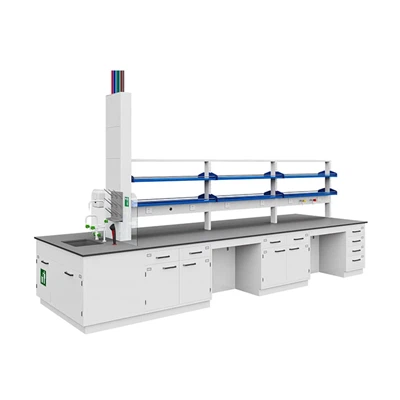
Airfoils play a crucial role in the design and functionality of fume hoods, a product we are proud to supply. As a leading provider of fume hoods, we understand the significance of airfoils in ensuring the safety and efficiency of these essential laboratory equipment. Fume Hoods
Understanding the Basics of Fume Hoods
Before delving into the role of airfoils, it’s important to have a basic understanding of fume hoods. Fume hoods are enclosed workspaces designed to capture, contain, and exhaust hazardous fumes, vapors, and particles generated during laboratory procedures. They are a critical component in maintaining a safe working environment for laboratory personnel by preventing the release of harmful substances into the surrounding area.
The primary function of a fume hood is to create a negative pressure environment inside the hood, which draws air and contaminants into the hood and then exhausts them outside the building. This is achieved through a ventilation system that includes a fan and ductwork. However, the design of the fume hood itself, including the shape and placement of airfoils, also plays a significant role in the effectiveness of the ventilation system.
What are Airfoils?
Airfoils are aerodynamic shapes designed to manipulate the flow of air. In the context of fume hoods, airfoils are typically located at the opening of the hood, known as the sash. They are designed to control the airflow into the hood, ensuring that it is smooth, laminar, and efficient.
The shape of an airfoil is carefully engineered to create a pressure difference between the top and bottom surfaces. As air flows over the airfoil, the shape causes the air to move faster over the top surface than the bottom surface. This creates a lower pressure on the top surface, which in turn creates a lift force. In the case of fume hoods, the lift force helps to draw air into the hood, improving the capture efficiency of the ventilation system.
The Role of Airfoils in Fume Hoods
1. Improving Capture Efficiency
One of the primary roles of airfoils in fume hoods is to improve the capture efficiency of the ventilation system. By controlling the airflow at the sash opening, airfoils help to ensure that hazardous fumes and particles are effectively drawn into the hood and exhausted outside the building.
When air enters the fume hood, it should flow smoothly and evenly across the work surface. Airfoils help to create a laminar flow, which reduces turbulence and minimizes the chances of contaminants escaping from the hood. This is particularly important when working with volatile or toxic substances, as even a small amount of leakage can pose a significant health risk to laboratory personnel.
2. Reducing Airflow Resistance
Another important role of airfoils is to reduce airflow resistance. As air flows through the fume hood, it encounters resistance from the walls, sash, and other components of the hood. This resistance can reduce the efficiency of the ventilation system and increase the energy consumption of the fan.
Airfoils are designed to streamline the airflow, reducing the resistance and allowing air to flow more freely through the hood. This not only improves the performance of the ventilation system but also reduces the energy consumption of the fan, resulting in cost savings for the laboratory.
3. Enhancing Operator Comfort
In addition to improving the safety and efficiency of the fume hood, airfoils can also enhance operator comfort. By creating a smooth and laminar airflow, airfoils reduce the noise and turbulence inside the hood, making it more comfortable for laboratory personnel to work.
Furthermore, airfoils can help to reduce the draft at the sash opening, which can be uncomfortable for operators. By controlling the airflow, airfoils ensure that the draft is minimal, allowing operators to work in a more comfortable environment.
4. Meeting Safety Standards
Fume hoods are subject to strict safety standards and regulations to ensure the protection of laboratory personnel. Airfoils play an important role in meeting these standards by improving the capture efficiency and airflow characteristics of the fume hood.
Many safety standards require fume hoods to have a minimum face velocity, which is the speed of the air entering the hood at the sash opening. Airfoils help to achieve and maintain the required face velocity by controlling the airflow and reducing the resistance. This ensures that the fume hood is operating within the safety limits and providing an effective barrier against hazardous substances.
Different Types of Airfoils in Fume Hoods
There are several different types of airfoils used in fume hoods, each with its own unique design and characteristics. Some of the most common types of airfoils include:
1. Radius Airfoils
Radius airfoils are the most common type of airfoil used in fume hoods. They have a rounded shape that helps to create a smooth and laminar airflow at the sash opening. Radius airfoils are effective at reducing turbulence and improving the capture efficiency of the fume hood.
2. Beveled Airfoils
Beveled airfoils have a sloped or angled shape that helps to direct the airflow into the hood. They are particularly effective at capturing fumes and particles that are generated at the back of the hood. Beveled airfoils can also help to reduce the draft at the sash opening, improving operator comfort.
3. Airfoil Sashes
Airfoil sashes are a type of sash that incorporates an airfoil design. They are designed to improve the airflow characteristics of the fume hood and enhance the capture efficiency. Airfoil sashes can be either fixed or adjustable, depending on the specific requirements of the laboratory.
Conclusion
In conclusion, airfoils play a crucial role in the design and functionality of fume hoods. They are essential for improving the capture efficiency, reducing airflow resistance, enhancing operator comfort, and meeting safety standards. As a fume hoods supplier, we understand the importance of airfoils in ensuring the safety and efficiency of our products.
Ducted Fume Hoods If you are in the market for a fume hood, we encourage you to contact us to discuss your specific requirements. Our team of experts can help you select the right fume hood with the appropriate airfoil design to meet your needs. We are committed to providing high-quality fume hoods that are safe, efficient, and reliable.
References
- American National Standards Institute (ANSI). (2016). ANSI/ASHRAE 110-2016: Method of Testing Performance of Laboratory Fume Hoods.
- National Fire Protection Association (NFPA). (2015). NFPA 45: Standard on Fire Protection for Laboratories Using Chemicals.
- Occupational Safety and Health Administration (OSHA). (2012). Laboratory Standard (29 CFR 1910.1450).
HAMECC(Shanghai) Lab Solutions Co., Ltd.
We’re well-known as one of the leading fume hoods manufacturers and suppliers in China, featured by quality products and good price. Please rest assured to buy customized fume hoods made in China here from our factory.
Address: Building 1, No. 2222, Huancheng Road, Jiading District, Shanghai
E-mail: info@hamecc.com
WebSite: https://www.hamecc.com/
